
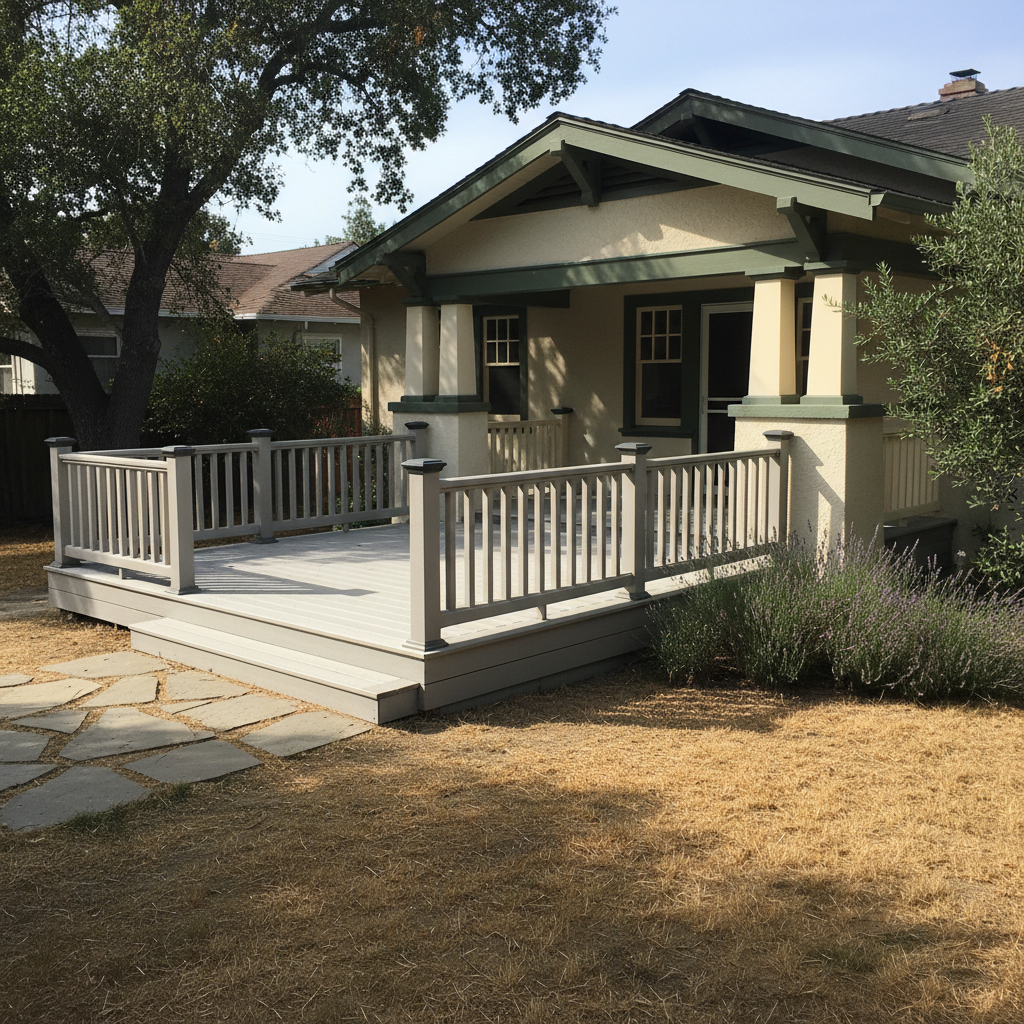
A deck is one of the few home projects where the part you can't see matters more than the part you can. Anybody can make a deck look good for the first summer. The footings, the ledger attachment, the fastener choice, that's what decides whether it's still solid in year twelve or whether it's wobbling by year four. Picking a builder in Redlands means picking someone who gets that part right, because this ground and this climate don't forgive shortcuts the way they might somewhere milder.
What the soil here actually does to a deck
Redlands sits on a mix of ground depending on where you are. Up toward the foothills and the older north side, you'll often hit decomposed granite, which drains fast but doesn't compact the same way everywhere, so footing depth matters more than guesswork. Down in the flatter areas and some of the old citrus grove land that got built over in the 60s through 80s, there's clay that expands when it's wet and shrinks hard in a dry summer. A footing that's too shallow in that kind of soil can shift a few degrees over a couple of seasons, and that's enough to throw a railing out of plumb or crack a ledger seal.
Most residential deck footings here run 18 to 24 inches deep, sized to the post load and spaced based on the beam span, not just eyeballed at a standard distance. A builder who tells you footing depth before they've looked at your soil, or who wants to pour the same size footing regardless of what's on your lot, hasn't actually checked anything.
Permits, inspections, and HOAs around here
If you're inside the city, the Redlands building department handles the permit, and if you're out in an unincorporated pocket toward Mentone, it goes through San Bernardino County instead. Either way, a deck more than about 30 inches off grade, or one attached to the house, is going to need a permit in most cases. There's usually a footing inspection before any concrete gets poured, and a framing inspection before the decking boards go down, so the inspector can see the ledger flashing, the joist hangers, and the post connections while they're still open to view.
A contractor who offers to skip the permit to save you time is also skipping the inspections, which means nobody with a trained eye is checking the ledger flashing or the footing depth before it's buried. If you're in one of the newer subdivisions east toward Crafton or south near the hills, there's a decent chance you've also got an HOA with its own approval process for anything visible from the street, including railing style and deck height. That's a separate step from the city permit, and it's worth asking your builder whether they've dealt with it before.
What separates a real bid from a cheap one
Two bids can list the same square footage and come out thousands apart, and the difference is usually buried in details most homeowners don't think to ask about.
- Ledger attachment. The ledger board is what ties the deck to the house, and it should be through-bolted, not just lag-screwed, with proper flashing behind it to keep water from getting into the house rim joist. This is the single most common point of failure on older decks we get called to repair.
- Joist spacing. 16 inches on center is standard for most wood decking. Composite decking often needs 12 inches on center because it flexes more between supports, especially in long summer heat when boards soften slightly.
- Fasteners. Stainless steel or coated deck screws, not whatever was cheapest that week. Galvanized nails in treated lumber corrode faster than people expect, especially with any irrigation overspray hitting the structure.
- Post-to-beam connection. Notched posts with proper hardware, not just toe-nailed lumber sitting on a bracket.
If a bid doesn't break these out at all, ask. A builder who can explain why they're using a certain joist spacing or fastener is a builder who's thought about your specific deck, not copied a template.
What the Redlands weather does to the timeline
Summer here runs hot and dry, often past 100 degrees in July and August, which affects more than comfort on the job site. Concrete footings cure slower in extreme heat if they're not kept damp the first few days, and staining or sealing a new deck in peak heat can cause the product to flash-dry on the surface before it's soaked in, which leads to a finish that peels early. Most builders will either start early in the morning during summer or push staining jobs to spring or fall.
Winter brings most of the year's rain, generally December through March, and it doesn't take much of a downpour on a hillside lot in south Redlands to show you where the drainage problems are. A deck built without attention to grading can end up funneling water straight at the house foundation instead of away from it. The Santa Ana winds that come through in fall dry everything out fast, which is actually decent timing for sealing work, since the wood needs to be fully dry before any stain or sealant goes on.
Older homes versus newer subdivisions
A lot of the housing near downtown and around Prospect Park was built in the early 1900s, and additions over the decades have sometimes included decks that were never permitted at all. If you're having work done on one of those, expect the builder to find things during demolition that weren't on any drawing, old wiring run through a rim joist, rot hidden behind a planter box, a ledger with no flashing at all. That's normal for a house that age, and a good builder will flag it rather than build over it.
Newer subdivisions built from the 80s onward tend to have more predictable framing and better original drainage, but they also tend to have HOA rules about materials and railing height that an older neighborhood won't have. Either way, the builder should be looking at what's actually there, not assuming based on the neighborhood.
Red flags worth walking away from
No written contract with a payment schedule tied to actual progress. A verbal promise to "take care of the permit later." A quote with no mention of footing size, post spacing, or fastener type. Pressure to pay a large deposit upfront, more than maybe a third, before any material is on site. And if a builder can't tell you the difference between how they'd frame for composite decking versus wood, they haven't built enough decks to be trusted with yours.
We've been doing this work long enough in this area to know which neighborhoods have tricky soil, which streets flood in a heavy February rain, and what an inspector is going to want to see before they sign off. If you're trying to figure out whether a quote makes sense, or whether an existing deck is worth repairing instead of tearing out, Ashford Deck Company is a good place to start that conversation.